Showing posts with label Botswana. Show all posts

Thursday, May 31, 2018

People of Botswana


Identification
Formerly Bechuanaland Protectorate under the British, Botswana became independent in 1966. Bot swana means "place of Tswana" in the dominant national language, and the citizenry are called Bat swana, or Tswana people. The term Batswana, however, bears a double meaning. In government rhetoric, it refers to all citizens of Botswana. But the word also refers to ethnically "Tswana" people, as distinct from the other ethnic groups present in the country. This double meaning allows for both the expression of strong civic national sentiments and debate about the dominance of Tswana people and ideology over the broader population.

Location and Geography.
Botswana is a landlocked and arid country. Bordering on South Africa, Zimbabwe, Namibia, and Zambia, it is 224,607 square miles (581,730 square kilometers) in area, about the same size as France. Two-thirds of the country is comprised of the Kalahari Desert, which is covered with grasses and scrub but has scarce surface water. Mean annual rainfall ranges from under 10 inches (250 millimeters) per annum in the southwest to over 25 inches (635 millimeters) in the northeast. The entire country is prone to extended droughts, causing significant hardship to agriculturalists, pastoralists, and hunter-gatherers. The Okavango Delta, in the north, is a large inland delta, and people there fish and farm on its flooded banks; tourists are drawn to the large numbers of wildlife that congregate in the area. The eastern third of the country, with more rainfall and fertile soils, is home to most of the population. Prior to independence, the British administered the Protectorate from Mafiking in South Africa. The capital city today, Gaborone, was built on a village site in the southeastern corner of the country at independence, near the borders of several of the Tswana polities that dominated the country.


Linguistic Affiliation. Bantu, Khoisan, and Indo-European languages are spoken in Botswana. English is the official language and Setswana the national language. This means that the language of government and higher education is primarily English, but that Setswana is the dominant language spoken in the country. Ninety percent of the population is said to speak Setswana. The term Setswana refers both to Tswana language, and to Tswana practices/culture, and there has been increasing resistance.

Symbolism. "Pula," the Setswana word for rain, is featured on the coat of arms, and is called out frequently at public gatherings as a salute and cry of approbation. It is also the term for the national currency. The national anthem is "Lefatshe la Rona," ("Our Country"), and its title captures the strong attachment most Batswana feel to the land and its resources, as well as some antiforeign sentiments. Cattle were tremendously important not just to a material economy but also to the symbolic economy of status, family, and social relations in the past, and cattle remain powerfully evocative to most Batswana today.


Wednesday, May 10, 2017

5 of Botswana's Most Famous Places

Moremi Wildlife Reserve


Arguably the most beautiful wildlife sanctuary in Africa, this game reserve lies in the heart of Botswana’s Okavango Delta. Mopane tree canopies dominate the dry landscapes and the rest of the area is a combination of floodplain grasses, riverine woodland and permanent delta. The reserve supports one of the greatest concentrations of wildlife in Africa and includes endangered wild dogs, herds of elephants and the ‘Big Five.’


Kubu Island

Kubu Island is easily one of the most beautiful places to visit in Botswana and was once described by Top Gear presenter Jeremy Clarkson as the most astonishing place he’d ever been! It’s actually a dry granite rock island engulfed by a white sea of salt in the Makgadikgadi Pan. The island is now protected as a national monument, with visit proceeds going towards helping the local community.


Nxai Pan National park

Nearby this national park consists of Nxai Pan, which is one of the Makgadikgadi Pan salt flats. Characterised by sand dunes, vast salt pans, the famous Baines baobab trees it’s a beautiful place which of course offers excellent opportunities to see bird and wildlife. Open all-year round, it’s located in northeastern Botswana so it’s easy to combine a visit with the nearby Okavango Delta and the Chobe.


Makgadikgadi Pan

Another place with an unearthly beauty is the Makgadikgadi pans, the largest salt pans in the world. Located in the middle of the dry savanna of northeastern Botswana, it’s the remains a huge lake which dried up thousands of years ago. The salt-encrusted pans are flat and arid and come complete with a skyline which appears to go on forever. Camping safaris to spot the resident zebra, wildebeest their predators are a good option for more adventurous travellers.


Okavango Delta

Arguably the most beautiful wildlife sanctuary in Africa, this game reserve lies in the heart of Botswana’s Okavango Delta. Mopane tree canopies dominate the dry landscapes and the rest of the area is a combination of floodplain grasses, riverine woodland and permanent delta. The reserve supports one of the greatest concentrations of wildlife in Africa and includes endangered wild dogs, herds of elephants and the ‘Big Five.’


Wednesday, March 22, 2017

Botswana's Famous Jack's Camp

A relic of one of the world's largest super-lakes, the Makgadikgadi dried up thousands of years ago as a result of the continued shifting of the earth's crust.

Jack's Camp is sited in this prehistoric setting offering just ten bedouin-style canvas tents with en-suite bathrooms and spacious bedrooms with persian rugs and cool cotton sheets.


Monday, August 8, 2016

Safari top the list for family holidays

Safari was by far the most popular family activity in the region, followed by adventure and beach activities. “Wildlife, ecology or bush experiences shared by the entire family are the most popular,” said Christian Grosch, MD of Airboat Afrika.


“Safari is an amazing way to gather the family together and create the experience of lifetime,” said Margie Jordan of US-based Jordan Executive Travel Service. She pointed out that in Southern Africa, families could secure an entire safari lodge.

Top destinations

1.Cape Town and the Western Cape

Cape Town came out as the top destination for families in Southern Africa. The Garden Route was noted for family-friendly options including Ostrich Safari Farm in Oudtshoorn, the Cango Caves, Featherbed Nature Reserve, Birds of Eden and Monkeyland.

2.South Africa
it is well-suited to self-drive holidays. Suggested that the availability of self-catering accommodation options positioned the country well for families.

3.KwaZulu Natal
The warm beaches in KwaZulu Natal were seen as a draw card for families, while uShaka Marine World in Durban was seen as must visit for families. The South Coast region in particular was described as a great family destination because of the many guest lodges, camping grounds and beach activities available. 

4.Botswana
“Botswana is definitely experiencing an increase in family travel,” said Walter Smith, MD of Desert & Delta Safaris.

Botswana offers Mother Nature's natural highlights with ease and authenticity. Small exclusive camps or lodges, private guides and activities focused on real natural experiences.”

5.Other highlights


Namibia was highlighted for the desert activities on offer.

Thursday, April 14, 2016

Fresh ideas for adventures in Botswana

Elephant interactions and indulgence at Sanctuary Retreats


Sanctuary Retreats offers an elephant interaction in partnership with the Living with Elephants Foundation in the Okavango Delta. Guests stay at Sanctuary Stanley’s Camp or Sanctuary Baines' Camp and walk through the wilderness with Jabu, Thembi and Morula, a trio of semi-habituated orphaned elephants. While guests interact with elephants, they do not ride the elephants.

A day spent on a safari in the Okavango wetlands can be topped off in Sanctuary Baines' Camp's opulent star bath. Hidden on a private viewing deck, guests unwind surrounded by twinkling lanterns and shining stars. Four-poster 'sky beds' can be rolled on to a private wooden deck for a night under the starry skies.

At Sanctuary Stanley's Camp guests can indulge in a tranquil water lunch. The buffet-style meal is enjoyed, sitting with feet soaking in the cool, shallow waters of the Okavango Delta. For special occasions, private dinners can be arranged at the pool, complete with lanterns and candles. 
 

Balloon Safaris with Wilderness

Wilderness Safaris has also launched hot-air balloon safaris at Vumbura Plains and Little Vumbura camps in the Okavango Delta, available this year from April 18 to end September, coinciding with the dry season. Guests can also opt for an exclusive eight-minute helicopter transfer to and from the launch site, getting an additional bird’s-eye view of the terrain. 


Private camping tours with Drifters 

New from Drifters Adventure Tours are private camping tours in Botswana for small groups of two to 12 clients.  According to Christiaan Steyn, Marketing Manager, the tours feature tailor-made itineraries at affordable rates.
Drifters’ 16-day Botswana tour packages the country’s rich diversity.  Clients get the opportunity to interact with the local San people in the barren Kalahari Desert and spend three nights on a private island in the Delta, undertaking several mokoro trips and guided walking safaris. They also spend four nights camping wild in the national parks and a night under the stars on the Makgadikgadi salt pans.


Tuesday, April 12, 2016

Welcome to Botswana


Blessed with some of the greatest wildlife spectacles on earth, Botswana is one of the great safari destinations in Africa. There are more elephants in Botswana than any other country, the big cats roam free and there’s everything from endangered African wild dogs to aquatic antelopes, from rhinos making a comeback to abundant birdlife at every turn.


This is also the land of the Okavango Delta and the Kalahari Desert, at once iconic African landscapes and vast stretches of wilderness. Put these landscapes together with the wildlife that inhabits them, and it’s difficult to escape the conclusion that this is wild Africa at its best.


Botswana may rank among Africa’s most exclusive destinations – accommodation prices at most lodges are once-in-a-lifetime propositions – but self-drive expeditions are also possible. And whichever way you visit, Botswana is a truly extraordinary place.


Top responsible travel tips for Botswana

1. Be considerate of Botswana’s customs, traditions, religion and culture.

2. For environmental reasons, try to avoid buying bottled water. Fill a reusable water bottle or canteen with filtered water instead.

3. Always dispose of litter thoughtfully, including cigarette butts.


4. When bargaining at markets, stay calm, be reasonable and keep a smile on your face. It's meant to be fun!

5. Learn some local language and don't be afraid to use it - simple greetings will help break the ice.


6. Shop for locally made products. Supporting local artisans helps keep traditional crafts alive.

7. Refrain from supporting businesses that exploit or abuse endangered animals.

8. Please ask and receive permission before taking photos of people, including children.


9. When on community visits or homestays, refrain from giving gifts or money to locals.

10. Refrain from buying ivory or other products harvested from endangered animals.

Thursday, March 31, 2016

Tips for traveling in Botswana

Money & Spending

The national currency of Botswana is the Pula - a regionally strong currency - but the US dollar is widely accepted at lodges and hotels throughout the country. Major hotels have foreign exchange desks and most shops, lodges and travel agencies will accept traveler's cheques. All major credit cards are accepted at hotels, lodges, shops and restaurants. However, some establishments do not accept payment by Diners or American Express.

Full banking services are only available in Botswana’s major towns, but ATM's are becoming increasingly more common.

Banking hours: 8:30am to 3:30pm Monday to Friday and 8:30am to 11am on Saturday.
 

Tipping

Provided the service is good, it is customary to tip lodge staff and guides in either Pula or any hard currency on your Botswana safari. The amount that you tip varies depending on the staff member’s role and the size of your group.

In city restaurants and bars, a 10% tip is customary when the service charge is not included.

For in-depth tipping guidelines enquire with one of our Africa Safari Experts - they'd be happy to share their knowledge with you.
 

Climate

Average summer temperatures: 18°C to 38°C

Average winter temperatures: 6°C to 27°C

Rainy season: October/November to March/April


What to Pack

When packing for a Botswana safari, practicality is key. In the summer months, daytime temperatures can exceed 40°C, so shorts and t-shirts are best, with a longer shirt for protection against the sun if you burn easily. Choose clothing in neutral colors (try to avoid white) and wear lightweight long-sleeved clothing at night and in the early mornings to protect against mosquitoes.

During the cooler months it is best to layer up as the days are still warm and sunny but the night time temperatures can drop close to freezing point. Be sure to pack a thick fleece or jacket for early morning and evening game drives, which can be very cold.
 

Flights & Getting Around

Did you know you can book your flights through Namibia Reservations?


Gaborone: you can fly to Sir Seretse Khama - Botswana's main international airport - from Johannesburg but most safari-bound travelers skip it and fly directly to one of the two airports below.

Maun: regular flights from Johannesburg and Windhoek (via Victoria Falls) mean easy access to the Okavango Delta's gateway airport. You'll transfer to light charter aircraft for your flight into the Delta.

Kasane: fly to Chobe's gateway from Johannesburg, Gaborone or Maun. You'll transfer by road to lodges in the Chobe River area or smaller aircraft for safaris in Savute or Linyanti. Victoria Falls is less than 100km away by road.

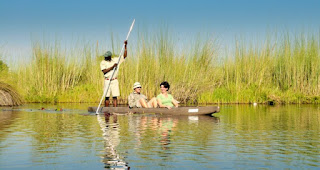
Charter flights on small aircraft are the norm for getting from place to place in Botswana with transfers and game drives conducted in open-sided 4X4 vehicles. Transfers and game viewing by motor boat and mokorro (dug-out canoe) are common in the Okavango Delta.
 

Visa & Passport Requirements

Every visitor to Botswana must be in possession of a passport that is valid until six months after the initial date of travel; however, no visas are required by citizens of EU countries, most Commonwealth countries, the USA, South Africa, Switzerland, Israel and Norway.

Upon arrival you will receive a 30-day entrance stamp and, for those who plan on traveling onward to Botswana’s neighboring countries, visas for Namibia, South Africa, Zambia and Zimbabwe can be obtained in Gaborone.

Thursday, March 17, 2016

Botswana’s rivers running wild

Reports from Botswana say that the country’s river systems are flowing freely around much of the Okavango Delta for the first time in a decade.
This means that safaris to the country are reporting bumper wildlife sightings, with elephant families and hippos particularly abundant, according to tour operator Expert Africa.

And for the first time in 30 years the Selinda Spillway, the waterway that links the Okavango Delta to the Linyanti Swamps, is flowing.

The Delta is home to a staggering range of wildlife including the endangered wild dog, lions, elephants, wildebeest, spotted hyenas, leopards, impalas, giraffes, baboons, vervet monkeys and around 400 bird species.

The increased water points around the Delta are likely to attract more game viewings and more predatory encounters.

A spokesperson for Expert Africa told us: “Traditionally the best wildlife concentrations have been in the western end of the Selinda Reserve – because that is where the Kwando and Linyanti Rivers are, and the crucial Zibadianja Lagoon.

“In a normal year, there's scarcely any game inside the dry interior of the Reserve during this time of year.  But this year there is, with the Selinda Spillway being used as a corridor. Groups canoeing through this area are reporting a lot more wildlife inland here that would normally have been expected.”

The Okavango Delta is the world’s largest inland delta with no outlet to the sea.

Monday, March 7, 2016

Experimental young artists at work


Most young artists in Botswana still remain under the radar and never get a chance to experiment long enough to make a lasting impression. 

Last week Thapong Visual Arts Centre hosted the first ever Young Artist Exhibition and it was an opportunity for young artists to get exposure. 

Mmegi Staffer Mompati Tlhankane went to the exhibition gallery to see some of the most outstanding artworks from the inaugural exhibition. 

While some artworks are more outstanding than others, collectively the youngsters went all out to show that age is nothing but a number. Growth and experimentation is communicated through every piece.

One of the exhibitors Thato Khomela came up with rather unique and unusual concepts in his collection of paintings.  One of his outstanding artworks is called Bathing in the Moonlight and shows a distinctive view of a woman taking a bath at night.  The artwork itself is a blend of vision, feeling and practicality.  From a distance, the piece looks more like chalkboard paint, but coming closer one could now realise that it is acrylic on canvas.
Another one is called Practice Makes Perfect and it is also acrylic on canvas and the paint is available in varying shades of colour.  He used light and dark to develop dimensional forms.  The portrait shows a monstrous looking finger.  

The portrait looks like it had been stained with a brown liquid.  The artist’s experimentation on the black colour looks picture perfect and demands a lot of absorption from the viewer.  

Khomela told  Arts & Culture that  he saw the exhibition as an opportunity to showcase his skills.  “I experimented with acrylic using monochromatic to create endless colours to explore tints, tones and shades,” he said.

Khomela said he came up with the strategy to bring out his other hidden talents.
“I wanted to differ from other artists and show growth,” he said. He indicated that his Bathing in the Moonlight created a little bit of controversy because people had been enquiring about it.  Khomela said the finger artwork shows that people can get better with practice. “The finger shows a person playing a game we used to call chama or ale. 

The finger is finally perfect after years and years of practice, so is every aspect of life,” he said.

Thursday, January 21, 2016

Seven Wonders of Botswana

What are the Wonders of Botswana?  

 Botswana is home to one of Africa's Seven Wonders of Nature, but that is only a start to the wonders this country offers. Botswana is truly an African gem for encounters with nature, but the country is also rich in culture and heritage.


Okovango Delta 

Okovango Delta is the largest inland delta in the world formed from the Okavango River’s tectonic drain. The delta has almost 11 cubic kilometers of water spreading over its area of almost 15,000 square kilometers. Okavango Delta is rich in wildlife and provides an opportunity to see the Big 5. 
 
Kubu Island
 
 Kubu Island is made up of dry granite rocks situated in Botswana’s Makgadikgadi Pan. Kubu Island is a national monument and a consecrated place for the indigenous people. Kubu actually means large rock, but can also mean hippopotamus in Tswana.

 Moremi Game Reserve
Moremi Game Reserve is one of Botswana’s national parks. The park’s name was taken from the BaTawana tribe’s chief, Chief Moremi. It is one of Botswana's wildlife viewing gems.

Tuli Block

This narrow border of Botswana lies in between Zimbabwe and South Africa. Tuli Block is known because of its geographical features such as the Solomon’s Wall and Lepokoe Hills. This piece of land features beautiful rock formations, abundant wildlife, strange vegetation and of course, a rich archaeological heritage.

Tsodilo Hills

The Tsodilo Hills, a UNESCO World Heritage Site, has exceptional spiritual and religious connection to locals. Tsodilo Hills traces human settlement over hundreds of decades. The hills features rock paintings of more than 4,500 within its 10 square kilometer area.


Tuesday, January 12, 2016

Okavango Delta, largest Inland Delta

Botswana’s magnificent Okavango Delta, the world’s largest inland delta, is a maze of deep lagoons, large lakes and hidden, meandering channels. 
 During the annual flood season the Delta covers a vast area of over 16 000 km² before shrinking to less than 9000 km² in the dry season. Trapped in a basin of parched Kalahari Desert sand, the freshwater oasis attracts wildlife that depends on the permanent waters of this unique environment.

http://botswana-reservations.com/location/okavango-delta/
For more information please contact us at

Thursday, October 15, 2015

Footsteps Across the Delta

http://botswana-reservations.com/lodges/ 
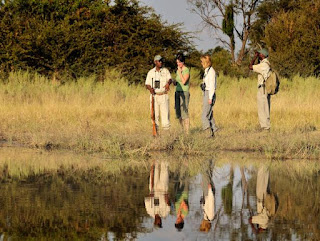
If you're keen to do some walking in Botswana, then Footsteps Across the Delta should be at the top of your wish list! These are opportunities to explore the environment and wildlife with an expert guide.

 
Footsteps is a very simple and rustic camp, currently located on the edge of a beautiful hippo-filled lagoon (the camp is fully portable and tends to be moved to a new location every couple of years). The tents are set up in the shade of a lovely forested area. 

http://botswana-reservations.com/lodges/
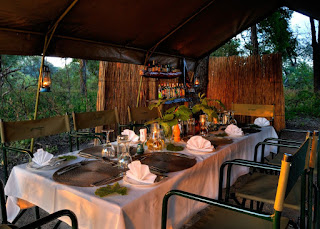
The main area at Footsteps is a simple open-sided canvas tent which has a nice view over the lagoon. As well as a dining table, There is also a mini-library.

Each evening, a fire is lit in front of the main tent, and everyone sits round to discuss the day's sightings and events. There is even a small viewing mound with a couple of comfortable chairs, also overlooking the lagoon.

http://botswana-reservations.com/lodges/
A few nights' stay here will give you an authentic taste of the bush – the area is notable for the diversity of wildlife present. Both wild dog and lion are often seen in the area and also a variety of plains game including kudu, tsessebe, zebra, giraffe and impala. If you wish, you can also go on game drives, and mokoro, depending on water levels.

For more information please contact us at

Tuesday, September 29, 2015

Botswana Travel Tips...

 
1. What to Bring
Binoculars, torch, insect repellent, lip salve, sunscreen, sunglasses. Cosmetics, medications, and cigarettes are all available in the major towns, but if specific brand names are needed, it is best to bring enough to last your stay.
However, care needs to be taken to comply with international aviation security regulations for items in carry on luggage. Contact your airline for details.

2. Clothing and Personal Care

In summer, lightweight, lightcoloured cottons are preferable.
Garments of neutral colours that blend with the bush and forest are advisable for safaris and game viewing.
Avoid synthetic materials and black clothing, as they increase perspiration and discomfort.
Bring a lightweight jacket and/or jersey for unexpected temperature changes or rain.
In winter, wear trousers, long sleeved shirts / blouses and jerseys.
From May – August, night temperatures can fall below zero degrees Celsius, so warm jerseys and jackets are vital, especially on morning and evening game drives.
Closed, comfortable walking shoes or gym shoes are a must in all seasons.
Special attention should be given to protection from the sun. Bring a sunhat, good quality sunscreen, sun lotion and polarised sunglasses.
Wide brimmed hats are preferable to baseball caps.

3. Fire Arms

The issue of firearms licenses in Botswana is strictly controlled, and all firearms imported under the authority of an import permit must be licensed immediately upon arrival in Botswana. The importation of firearms that do not have the manufacturer’s serial number or other number by which they can be identified, stamped or engraved on a metal part of the weapon is totally prohibited.
It should also be noted that police permits for firearms are issued on a limited quota basis, and there can be a considerable delay in obtaining a permit, particularly on first importation. It is advisable for intending importers to make applications well in advance of dispatch, so that unnecessary inconvenience and expenses can be avoided.

4. Health
Botswana is one of the healthiest countries in sub-Saharan Africa, with good primary health care facilities available throughout the country. However, the following health precautions are advised.
Vaccinations
If you are travelling to Botswana from areas infected with Yellow Fever, you must have a valid Yellow Fever vaccination certificate. Otherwise, no other immunisations are required. However, it would be wise to have an updated TPD (tetanus, polio, diphtheria) vaccine, and a Hepatitis A vaccine.
Malaria
Malaria, including cerebral malaria, is common in northern Botswana, in the Okavango and Chobe areas, particularly during and immediately following the rainy season, from November to April.
As the strains of malaria, and the drugs used to combat them, frequently change, and as certain strains can become drug resistant, it is best to seek medical advice before your departure and take any medication prescribed. Pregnant or very young children are not advised to travel to malarial areas.
Other precautions are: to wear long sleeves, socks, closed shoes, and generally keep the body covered, to sleep with a mosquito net and to use mosquito coils and repellent.
Sun And Heat-Related Problems
Always take preventive measures that include wearing a wide-brimmed sunhat and sunglasses, liberally applying sunscreen every three or four hours, regularly taking rehydration mixes, drinking plenty of water and fruit juices (at least three litres of liquid daily), avoiding prolonged exposure to the sun, and avoiding excessive amounts of alcohol, which causes dehydration.

5. Photographer Tips
Keep film in a cool box especially while traveling.
It is advisable to have all lenses fitted with UV or have filters due to harsh light.

6. Driving in Botswana
Wherever you are driving please respect wildlife, the environment and other drivers
Tar roads
The roads shown on the map above are all tar roads passable all year in a 2wd vehicle, generally they are kept in good condition throughout the country with only a few potholes, traffic is light and distances between fuel stations and toilet stops can be long so careful planning is required. Also bear in mind these areas are hot all year round so pay attention to tyre pressures – especially on well laden vehicles, if you’re vehicle is full of people and baggage tyre pressure and condition becomes much more important, then travelling long distances on hot roads can lead to tyre blowouts, so check your tyre pressure is correct, and take regularly stops along the journey for the tyres, passengers and driver !
Driving at night
Not recommended at all in Botswana (any part of the country) due to animals !
Wild animals, cows, goats, chickens, dogs and even people are attracted to the road as night falls and often sleep on the road, many collisions occur with vehicles causing serious injury, so if at all possible arrive at your destination before sunset and if you set out before dawn, keep your speed down and keep a sharp eye out for objects on the road.
Speed limits
Police are very vigilant about speeding the speed limit is:
120km/h out side city limits
100km/h on approach to towns village
60km/h passing towns and villages
30km/h in built up areas
Fines for speeding are instantly payable and in Pula cash only (police will escort you to nearest cash exchange if required)
Corruption and bribery is severely frowned upon as is drink driving in Botswana.

7.Driving License:
In Botswana, drivers must carry their driving permits licenses at all times while driving. Driving permits from neighboring countries and international driving permits are accepted in Botswana

8. Water Use
Tap water throughout the country is safe to drink. Bottled mineral water is readily available in most shops and supermarkets, and at camps and lodges.
Tourists travelling by road are advised to carry sufficient water at all times.

Thursday, September 24, 2015

Kwetsani Camp


Located in the centre of the Jao Concession, Kwetsani Camp is situated on an elongated island covered with palm, mangosteen and fig trees. The surrounding floodplains are home to a number of “Delta specials” – species that are found in few other places on Earth. Some of these may even be seen from the privacy of one of our five “tree-house” chalets, beautifully furnished en-suite units each comprising a bedroom and lounge, and made of canvas, wood and glass.


The raised dining room, lounge and bar area, from where sweeping vistas of the surrounding floodplains stretch to the horizon, often catches the gentle breeze blowing across the waving reeds. A plunge pool with loungers is just right for those sunny afternoon siestas.


For more information please contact us at 

Tuesday, September 1, 2015

Fun Facts about Botswana

The Okavango Delta is one of the largest inland deltas in the world, spanning 17,000km2 – an area almost the size of Wales. Okavango is often considered to be the biggest inland delta in the world.


None of the water in the Okavango Delta reaches the sea – the large majority of it is either evaporated or transpired, with a remaining 2% estimated to discharge into Lake Ngami.

All that remains of the once immense Makgadikgadi Lake, the Makgadikgadi Pans are the largest salt pans in the world, with an area of about 12,000km2. The area is an important habitat for meerkats, and also for wildebeest, zebra, pelicans and flamingos following periods of rain. 


The border between Botswana and Zambia is, at 700m, known as the shortest border between two fully independent countries. It is a riverine border sandwiched between the Zambia-Namibia and Zambia-Zimbabwe borders, all of which run through the middle of the Zambezi River.
 
For more information please contact us at 

Tuesday, August 11, 2015

Jao Camp in the Heart of the Okavango


Providing the ultimate Delta water experience in the heart of the Okavango, luxurious Jao Camp is set in an area where islands fringed with riverine forests meet vast productive floodplains. Shaded by a canopy of trees, the nine spacious and beautifully-designed tents offer en-suite facilities with indoor and outdoor showers. Expansive views from the private sala at each tent make for a sumptuous setting for afternoon siestas.


In addition to the main lounge and dining area, there are two plunge pools and a boma for dining under the stars, complemented by wines from an excellent wine cellar. Jao Camp also has a spa where a wide range of massage therapies are offered and a gym for the more active. The camp itself perfectly mirrors the beauty of the Delta and allows an effortless entry into the wonders of this pristine wetland paradise.


Jao Camp is the epitome of luxury in the most remote, scenically splendid setting, Frequently visited by wildlife, including a gregarious family of mongoose that has made Jao its home.


Jao’s Camp position, amongst waterways and lagoons, yet close to dry Kalahari woodland, means you can enjoy both water and land experiences, depending on the time of year.

For more information please contact us at