Showing posts with label Namibia Fauna and Flora. Show all posts

Tuesday, September 17, 2013

ESCAPADE OF FLOWER ART

"In all things of nature there is something of the marvelous, it lies deep in The ART of Flowers"

South Africa is the breeding ground for many beautiful flower species, giving south African Artists endless references for Floral Paintings.

Artist: Colin Wilkinson   
his mother was an artist and it was her creativity and love of nature, music and dance that inspired him - something for which Ian will always be grateful. - See more at: http://www.fineartportfolio.co.za/resume/Ian-Hertslet/134#sthash.vKpzqZIY.dpuf
Historically, and mythologically, flowers represent rebirth, and  fertility. Floral paintings can traditionally be either an external  landscape dominated by flowers, or it can be a still life study of  flowers taken more up-close. South Africa is the breeding ground for  many beautiful plant and flower species, giving South African artists  endless references for floral paintings. - See more at: http://www.fineartportfolio.co.za/category/Florals/15#sthash.qdycsII9.dpuf

 !Some  History on Flowers in Art!

Although a painted arrangement of flowers is not unusual today, flowers as a subject in art began as a minor decorative addition to other subjects.
The earliest flower found in ancient sites is the lotus. It appeared on wall paintings in Egyptian tombs and in low relief sculpture from the earliest dynasties. The lotus blossom was also a motif used in Egyptian jewelry and was the inspiration for the shape of the capital at the top of Egyptian columns.
During THE GOTHIC era from about 1200-1400 AD, depiction of flowers in paintings became more specific because they were used as symbols of the personality or importance of particular people.
For example, paintings of the Annunciation to the Virgin Mary would have a lily representing purity somewhere in the painting. Roses came to symbolize the blood of Christian martyrs in medieval painting. The word carnation comes from the Greek incarnacyon meaning “God becoming flesh”, in other words, Christ assuming human form. This carnation variety was pink (flesh) and was often included in Nativity pictures. 
 ♣
But even in THE DUTCH floral paintings there was symbolism.
We see the paintings as beautiful, meticulously rendered, floral arrangements sometimes including tulips, a specialty of Dutch growers and hybridizers.  But, to the people of the time, flowers represented much more than beauty.  Some paintings showed flowers in various stages from just budding, to full bloom, to losing petals. For the Dutch, this was a metaphor for the stages of human life. On close examination, one can often see tiny insects chewing on flowers or leaves. These symbolized decay and death. Butterflies on the flowers are a metaphor of Christ’s resurrection.


 Gallery of 'FLOWER Art'


You're only here for a short visit. Don't hurry, don't worry. And be sure to smell the flowers along the way.

Thursday, August 22, 2013

Remarkable Journey of The Rebel Desert Lion

'Terrace Male'


On August 16, the desert lion “XPL 68″, nicknamed the “Terrace male”, crossed the Kunene river to return home to Namibia. This was a significant and remarkable event for several reasons. 
Who better to describe the journey and it’s uniqueness than renowned lion researcher Dr Flip Stander, who stayed close on the heels of the Terrace male throughout his journey. Here is a post, which appeared on
on August 17, written by Dr Stander himself:
 
During the 1980s the tracks of a male lion was observed on several occasions at the mouth of the Kunene River by Rangers of the Skeleton Coast Park and Skeleton Coast Fly-In Safaris (re: Andre Schoeman). The tracks suggested that this lion was spending a lot of time in Angola, but he disappeared after 1990. There have not been any subsequent records of lion movements in Iona National Park as well as the south-western corner of Angola.
On 01 Aug 2013 the “Terrace Male” (Xpl-68) swam across the Kunene River and ventured into Angola. This was a significant event and marked the return of lions to the area after an absence of 23 years. In addition, it is also remarkable that a “Desert lion”, with no experience of perennial rivers or any body of water larger that the pools found at small springs in the desert, swam across 76 metres of fast-flowing & crocodile-infested water.
 
 
Xpl-68 stayed in Angola for 15 days and travelled 328.5 km (average 23.5 km/day). He explored the western section of Iona National Park and travelled as far north as Baia Dos Tigress.
At 01h00 on 16 Aug 2013 he crossed the Kunene River and returned to Namibia.
Since Xpl-68 is obviously not aware of the political boundary (Namibia/Angola), his remarkable journey actually started on 20 Jul 2013 when he left the Hoaruseb River to explore “uncharted” territory (see map below). During this period of 29 days he walked 780.4 km at an average of 26.9 km/day (max = 66.3 km).


Thursday, August 15, 2013

Adventure Travel: The Future of Tourism

Shannon StowellShannon Stowell, president of the Adventure Travel Trade Association, talks about about opportunities in this fast-growing segment of the industry.


Imagine snorkeling off the Norwegian coast, floating in the chilly Atlantic Ocean as a group of killer whales swims just a few feet below the surface waiting to capture their meal. Tourists can witness the orca’s unique feeding behavior only a few times a year, making for a truly rare experience.
Mingling with whales is just one of many tour options that fall under the category of adventure travel, a market that holds huge growth potential.
The adventure travel industry has experienced a major boom in recent years, with hundreds of new tours popping up and more operators and companies entering the lucrative business.
“The growth pattern in adventure travel is extremely high,” says Shannon Stowell, president of the Adventure Travel Trade Association (ATTA). “It’s because people want more from their vacation, they want something transformative, they want it to be memorable.”
ATTA, a global organization formed to grow and promote the adventure travel market, has some 800 members, from tour operators to travel agents to media providers. One of its goals is to encourage more people to get out and explore the world.
Since the term adventure travel elicits a variety of images and ideas for each person, ATTA tries to help define what exactly it is and establish an understanding among customers and businesses. Stowell says a trip must have three elements to categorize it as adventure travel. First, it has to have some sort of physical activity, not necessarily extreme. In fact, hiking is probably the most common pursuit on adventure tours. Second, there has to be some kind of connection to nature, such as a wildlife tour or a trek through the forest or mountains. Third, it has to include some kind of cultural experience.
“It can be extreme or it can be quite mellow,” Stowell says. “A walking tour in Scotland can be an adventure tour for somebody, and for somebody else it could be hiking in Nepal. There is some variation in the definition in the traveler’s mind.”
As adventure travel has become more popular, the selection of tours has grown substantially, making it tough to know where to begin for travelers who have never done an adventure trip.
“The beauty of adventure travel is it’s so broad and varied that I think if a person has a fascination with a place or an activity, it is what they should pursue,” Stowell says.
A seasoned traveler, Stowell has journeyed to some off-the-map destinations. One of the most interesting, he notes, was a trip to Kurdistan in Northern Iraq, mostly because it is lightly traveled by people from the West. A destination such as this is certainly a possibility, though few novice travelers may want to start there.
Classic destinations include Machu Picchu in Peru, or any city in Brazil, a personal favorite of Stowell’s. In fact, South America is a current hotspot, according to a survey of some 400 ATTA members. Norway, one of the few places where travelers can ski to the ocean, is also popular, offering activities from dog sledding to horseback riding and hiking.
One trend is a boom in soft adventure travel, a mellower category that can include anything from walking and biking tours to sightseeing and boating. Custom itineraries are also popular, and tour operators are getting into the action by creating programs with activities that have rarely been done on certain trips or in specific locations.
Part of ATTA’s mission is to educate tour operators on the best practices of adventure travel and help them boost their reputations as quality companies. Stowell recommends listening to what customers want and experimenting with a few different itineraries to gauge interest. Many companies may have a current experience or trip that could be changed or given a new twist, he says.
Consumers should check companies’ qualifications to make sure they meet specific standards. For example, it is essential for the company to have experienced, well-trained guides with proper certifications, as high-quality leaders make for a more personalized experience. And ATTA is there to lend a hand to companies. The organization will be launching an educational program aimed at the trade to increase knowledge about adventure tourism. The program will include skills training, such as certification for rafting or mountain guiding. The idea is that ATTA will have an educational offering that increases the professionalism and opportunities for travel companies and destinations.
“We exist to try to grow the sustainable side of the adventure travel industry,” says Stowell. “We’re really serious about trying to help companies increase their adventure tourism businesses and to do it responsibly.”
A large part of that initiative is the Adventure Travel World Summit, which gathers hundreds of tourism industry professionals in one exciting location to learn and invest in adventure travel, which many consider to be the future of tourism. This year’s summit will be held in Namibia, marking the first time the event will take place in Africa.
So why Namibia?
“The core reason for Namibia is it is one of the shining stars in Africa now for wildlife conservation,” Stowell says. That has been achieved over the last 20 years through “community conservancy.” These are basically plots of land with a tourism-interest site composed of one or many lodges. The owners and local communities sign a legal agreement whereby the communities benefit from what the lodges earn from tourists. The lodges, in turn, succeed by having incredible wildlife for customers to see. It puts everybody in charge of protecting the wildlife.

“It’s an amazing model and it’s working,” Stowell says. “We wanted the tourism professionals to come and see how this works, and possibly apply a version of it wherever they can.” This fits with ATTA’s commitment to responsible and sustainable travel because “tourism should be a protective force, not a destructive force,” Stowell adds. And he is not alone in this mentality.
At the summit in 2012, Taleb Rifai, the secretary-general of the World Tourism Organization, left the crowd with an insightful observation: “Adventure travel is what travel should be today and will be tomorrow.”
Adventure travel, with its strong focus on nature and culture, has the opportunity to be a preserver of human and natural capital, according to Stowell. He, along with Rifai, sees adventure travel as a way to explore the world more responsibly.
As for where adventure travel can go, it seems unlimited.
“I think adventure travel is an expression of the creative interest of humans,” Stowell says. As long as humans remain curious about the world, the adventure tourism industry will continue to thrive.
“The interesting thing about adventure tourism is that it’s about people exploring, so the directions it can go, I think, are incredibly diverse,” says Stowell. “We haven’t even thought about some of the things that will be offered as tours five years from now.”

Friday, December 9, 2011

News from the Gondwana Collection

Five Flowers for a 'green' Roadhouse
For its eco-friendly management the Cañon Roadhouse was rewarded by Eco Awards Namibia with five desert flowers (highest ranking). Cañon Lodge and Namib Desert Lodge were awarded three desert flowers each. Decisive factors were the water recycling plants (for the gardens), the eco-friendly waste disposal and the Gondwana Eco Competition at their lodges and on the web.

Exploring Damaraland on foot
Two diverse new hiking trails at Damara Mopane Lodge offer guests the opportunity to explore the flora and fauna of Damaraland at their leisure. The Mountain Top Route (4 km) requires some climbing to reach a hilltop in the vicinity of the lodge. By contrast, the Valley Walking Trail is a leisurely 4-km-walk through diverse vegetation such as Mopane forest, grassy plains and thickets of Trumpet Thorn.

The Quiver Tree - a Victim of Climate Change?
Red alert for the quiver tree was declared at the climate conference in Copenhagen in January 2010. Aloe Dichotoma and nine other plant and animal species were added to the 'Red List'. There was indeed reason for concern: In many places in southern Namibia entire groups of quiver trees were dying while hardly any young trees were discovered. Climate change was seen as the main suspect.

For more information or to make a booking email us: info@southern-africa-travel.com or visit our website: http://www.southern-africa-travel.com/

Thursday, September 15, 2011

News received from Tour Brief

Kulala Wilderness Camp closing April 2012
Wilderness has announced that Kulala Wilderness Camp will close permanently on 15.04.2012. After Kulala Wilderness Camp has closed, future Wilderness accommodation in the Sossusvlei area will be provided by Kulala Desert Lodge and Little Kulala.
Alternative arrangements are being made for all affected bookings.

Kulala Desert Lodge is expanding
Kulala Desert Lodge will add 6 new rooms (5 twins & 1 family) in early 2012. The main area will be enlarged and remodelled. The camp will be closed from 15 January to 14 April 2012 inclusive. Alternative arrangements are being made for all affected bookings.

Laughter comes calling...
A female brown hyena has taken up residence near Serra Cafema. Picture courtesy of Wilderness Safaris.


Lüderitz Nest Hotel: gateway to the Sperrgebiet
Main points
* 73 rooms, incl. family units & paraplegic friendly rooms
* Located in Lüderitz, with all rooms overlooking the ocean
* Ideal base for visiting Kolmanskop, Diaz Point, Shark Island and the rugged coastal scenery.
* Children’s playground, pool and childcare services
* Courtyard sheltered from wind
* Noted seafood restaurant
* Conferencing
* Offers Lüderitz Town Tour, Peninsula Tour, Kolmanskop Tour and Sunset Tour
* Friendly to children
* Suitable for the aged
* Suitable for the disabled with 3 x paraplegic friendly

Destination: the Sperrgebiet, tourism's rough diamond
In 1908, when diamonds were discovered by railway worker Zacharias Lewala in the vicinity of Lüderitz, the German colonial administration quickly declared a restricted zone, the 'Sperrgebiet'. For a long time, the only sign welcoming travellers read 'keep out'. Today, all that is changing, as parts of the restricted area have been opened for the adventurous. The Sperrgebiet is a rugged, closed area, that can only be visited with a permit that must be applied for two weeks in advance. No children under 14 can enter the Sperrgebiet. Kolmanskop, although treated separately, also falls within the Sperrgebiet. The attraction of the area lies in its history, it’s marvellous natural attractions and the sense of illicit pleasure that comes from visiting a forbidden zone. The trip to Lüderitz, from where the Sperrgebiet is entered, is difficult to schedule as the distances are long, and the route in and out between Lüderitz and Aus must be repeated. However, if the traveller is pressed for time, a fly-in is recommended.

Nature: the amazing plants of the Sperrgebiet
A large part of the Sperrgebiet consists of the Succulent Karoo Biome, a global diversity hotspot. Spreading from Aus, across the border of the Sperrgebiet, this environment is an under-marketed attraction that gives consultants an interesting alternative for clients with an interest in botany, succulent plants and deserts.


For more information please email us: info@southern-africa-travel.com or visit our website: http://www.southern-africa-travel.com/ or visit our sister website http://www.namibiareservations.com/

Wednesday, March 23, 2011

BüllsPort Guestfarm and Mountain Zebra research

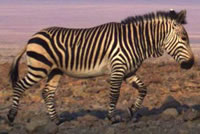
BüllsPort Guestfarm in collaboration with Professor Morris Gosling of the Namibian Nature Foundation, conducts a very interesting Mountain Zebra research in the spectacular Naukluft Mountains. While studying the ecology and behaviour of this wild and ancient species, which is now protected in Namibia, the project aims to discover how many zebras live on the farm. A hidden camera is positioned in the Quiver tree gorge, capturing the movements of the Hartman’s Mountain Zebra. After a year of research a number of 115 individual animals were recorded. Like human fingerprints, all zebra stripe patterns are individually unique so that once an animal is photographed, it can be recognised again. Visitors to the region are asked if they take pictures of Mountain Zebras in the Naukluft Region, to kindly forward photographs and especially good quality side views of animals, with a record of date and location of sightings to Prof Gosling: l.m.gosling@ncl.ac.uk
This information serves to keep track of the movements of known animals and greatly supports the research project.

For more information or to make a booking please click on our sister website: http://www.namibiareservations.com/bullsporte.html
or email us: info@namibiareservations.com

Friday, January 28, 2011

Auob River reaches highest level in more than 10 years

It is still uncertain whether the water will reach the Kgalagadi Transfrontier Park.

The Auob River, one of only two ephemeral rivers flowing through the Kgalagadi Transfrontier Park, has reached its highest level in more than a decade – but it is still uncertain whether it will reach the park.
The level of the river began rising sharply last weekend at Stampriet, near its source, and reached the settlement of Gochas, 72 km downstream, on Wednesday afternoon.
The General Manager of the Auob Country Lodge, Maureen De Villiers, told Tour Namibia this morning, the river was flowing the full width of its course and the water level was still rising.
De Villiers said the campsite at the lodge was flooded (Wednesday, 26 January) and that the rising level of the river has since forced the lodge to close the campsite. The Lodge however is operational.
She said the level of the Auob was about 1 m below the causeway at Gochas early yesterday evening, but this morning the river was flowing strongly over the causeway – preventing some of the learners at the village from getting to school.
De Villiers expects the river to begin subsiding in about two day’s time.
Meanwhile, Mr Jannie van der Merwe of the farm Kinkel near the Mata Mata border has told Tour Namibia the flood water is not expected to reach the border before Monday – if the flow is strong enough.
The Auob River is a vital component of the Kgalagadi ecosystem as the subterranean water supports a lush growth of Camel Thorn trees. Regular floods are essential to recharge the underground water which is extracted to provide water to the herds of Springbok, Gemsbok (Oryx), Blue Wildebeest and Red Hartebeest occurring along its course.
Water of the Auob River last reached the Kgalagadi Transfrontier Park in the year 2000. The Auob River eventually joins the Nossob River at Twee Rivieren at the park’s southern entrance.

Derived from TourNamibia


Visit our sister site for more details regarding the Auob Country Lodge: www.namibiareservations.com/auobe.html
or email us: info@namibiareservations.com