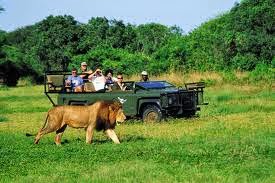
Showing posts with label Southern Africa Game Reserves. Show all posts

Friday, August 1, 2014

Southern Africa - Must See Destinations


If you are looking for a unique and exotic vacation, something different from the ordinary, then you should consider Southern Africa.

The Garden Route
The Garden Route of South Africa lies on the southern coast just east of Cape Town and extends from Mossel Bay to the Storms River mouth. The Garden Route is bordered by the Outeniqua, Tsitsikamma, and Langekloof Mountain ranges to the north and the Indian Ocean to the south. Here you will find Tsitsikamma National Park, the Knysna and Wilderness wetlands, relaxing beaches, hiking trails, and activities such as whale watching, sailing, and golf. This scenic coastal route is interspersed with a series of quaint and charming towns along the way. The climate is mild and the views are spectacular. The Cango Caves, one of South Africa's top ten most visited places, are located just north of the Garden Route. The Cango Caves are located close to Oudtshoorn, which is also the center of the South Africa ostrich farming industry. Many of the farms are open to visitors where you can tour the facilities, meet the birds up close, and even ride one! The Garden Route is a serene and beautiful part of South Africa, filled with astounding sights and plenty to do for both young and old.

Etosha National Park
Etosha National Parks is located in Namibia, one of the most sparsely populated countries in the world. Etosha is the third largest game reserve in Africa and has been recognized as one of the finer game viewing areas on the continent. Its main attraction is the so-called "Etosha Pan," an 80-mile saltpan that represents the remains of a large lake that used to fill the area. Here there are scattered waterholes that attract congregations of wildlife, particularly in the dry season from May to September. It is here that elephants, rare Black Rhinoceroses, prides of lions, cheetahs, and much more all roam in search of water. For one of Africa's most enthralling safari opportunities, you must visit Etosha.

Okavango Delta
For the more adventurous at heart the Okavango Delta, located in northern Botswana, is a veritable oasis of wildlife and natural wonder. This area is the world's largest inland delta, formed by the Okavango River, which begins in Angola and flows the Kalahari Desert, where it attracts wildlife from all over Africa. Described as "the river that never finds the sea," the Okavango disappears into a 6,000 square mile maze of channels and islands. With numerous lodges in this region, there is plenty to do. While in the Okavango a mokoro boat trip is a must. A mokoro is the local version of

a flat-bottomed canoe and is operated by a "poler" who uses a pole to push the boat forward and steer it accordingly. On a mokoro trip experienced guides lead you through the Delta as you silently glide down the channels and backwaters to places that are totally unreachable by any other mode of transport. Coming face to face with elephants crossing the waterways or herds of buffalos drinking from the Delta is nothing unusual. For those who enjoy bird life, the Delta has an incredible diversity of bird species. If you would prefer not to brave the water, there are a number of different safari options, either on foot or in four-wheel drive vehicles. With the game being so plentiful visitors to the area are often surprised at how close you can actually get to the animals. The Okavango Delta is a magnificent wonder of nature, perhaps one of our planet's greatest, and is still largely unspoiled making it the perfect destination for outdoor enthusiasts.

Kruger National Park

Located in the northeast region of South Africa, Kruger National Park has some of the most spectacular game viewing in the world. With safari lodges scattered in and around the park, one thing is for sure, this is a once in a lifetime experience. Finding yourself face to face with a pride of lions (from a safe vantage point, of course) or seeing a herd of elephants cooling down at the local watering hole is something everyone should experience. In Kruger the animals are in their natural habitats and are free to roam the nearly five million acres that makes up the park. Kruger has one of the greatest varieties of wildlife species on the continent and is a world leader in enviromental management techniques and policies. it is a well managed park with incredible animals viewing and wonderful accommodations.


Victoria Falls
A visit to Africa would not be complete if you did not see Victoria Falls. Known to the locals as Mosi-oa-Tunya (which means "the smoke that thunders"), Victoria Falls is classified as one of the seven natural wonders of the world. Located between Livingstone, Zambia and Victoria Falls, Zimbabwe on the Zambezi River, the Falls are a breathtaking and spectacular sight that have been known to leave viewers with a bit of moisture in their eyes - whether from the mist of the Falls or tears welling up is yet to be determined.

When David Livingstone first discovered the Falls he stated "Scenes so lovely must have been gazed upon by angels in their flight." The number of possible activities here are endless, ranging from short safaris on elephant back to lazy evening sundowners aboard a boat on the Zambezi to bungee jumping in the gorge to helicopter flights over the falls. Victoria Falls is surely one of Africa's must-see wonders.

These are just a few of the many exciting and amazing places to visit in Southern Africa. 

For holiday ideas and more information, be sure to check out our websites:
www.southern-africa-travel.com
www.zambia-reservations.com
www.namibiareservations.com

____________________________________________________________________
Hoanib Skeleton Coast
Opening on 1 August 2014, Hoanib Skeleton Coast Camp is scenically located in a broad valley at the confluence of two tributaries of the Hoanib River in the northern part of the private Palmwag Concession. Its location thus straddles the Palmwag area and the iconic Skeleton Coast National Park, in one of the most remote areas of the Kaokoveld.

Exclusivity is taken a step further as camp is only accessible by light aircraft and the camp itself consists of only seven twin-bedded tents and one family unit, each comprising stylish en-suite bedrooms with shaded outdoors decks. Flanked to the east and west by rugged hills, the camp looks out over stunning, starkly beautiful scenery and offers guests all the luxuries and amenities for an unforgettable stay.


 Book an unforgettable stay at Hoanib Skeleton Coast today!
For more information please contact
  Namibia Reservations at: info@namibiareservations.com

Thursday, July 17, 2014

Escape into the wild

 Wild campsites have the ability to make you feel a million miles away from the tedium of your daily routine, but they're not for the faint-hearted. Often they're at the end of treacherous roads with few facilities, and when the fire dies down there's no stopping visitors of the four-legged kind from slinking in to investigate. Satisfy your wild side at these campsites.......

Lesholoaga Pan - Kgalagadi Transfrontier Park , Botswana

 Lesholoago Camp
Location: 22 km from Mabuasehube East Gate.
Situated in the Mabuasehube GR on the western perimeter of the Lesholoago Pan which makes game viewing easy. The camp site has a shade shelter and pit latrine. Booking and prepayment required.

Lesholoago Camp 2

Location: 22 km from Mabuasehube East Gate.
Situated in the Mabuasehube GR on the eastern side of the Lesholoago Pan, the camp site has a shade shelter, pit latrine, rustic shower, toilet and running water. Booking and prepayment required.

Mahurushele - khutse Game Reserve, Botswana


     Moreswe 2, for scenery and isolation. This campsite looks out over the Moreswe Pan. If you stand on the roof of your bakkie you can see the nearby waterhole.
    GPS: S23.56194 E24.09685
    Molose 1, for wildlife. This campsite is spacious and located a stone’s throw from a permanent waterhole that often attracts lions and other animals.
    GPS: S23.38425 E24.18688
    Mahurushele 3, for shade. Khutse can become scorching hot in summer. No other campsite offers as much shade as this one.
    GPS: S23.28445 E24.38987

Masuma Dam - Hwange National Park , Zimbabwe

 Masuma Dam Camping Site is situated within Hwange National Park. Located on a high point offering a spectacular view of the wildlife and plain. Day and night camping is allowed even exclusive camping, the campsites are fenced. Clean with ablution.
Namuskluft - Rosh Pinah, Namibia


Namuskluft Restcamp in the south of Namibia 20KM from the Orange river. It was first started as a base from which 4x4 trips headed into the surrounding mountains. Apart from Campsites there is also self-catering bungalows available. Activities include hiking trails, self-drive 4x4 trips, and a swimming pool.

Chipinda Pools - Gonarezhou National Park, Zimbabwe

 The Chipinda Pools Tented Camp, a fantastic new facility, completed in July 2012 was funded by the Frankfurt Zoological Society as part of the Gonarezhou Conservation Project and comprises four extremely spacious East African style tents.
Two of the tents have a double bed and two stretcher beds and two of the tents have a double bed and two single beds allowing one plenty of flexibility for families.  Each tent has an en suite bathroom (with solar geysers providing copious amounts of piping hot water) at the back of each tent and a large covered veranda at the front. 

umThombe Kei River Lodge - Wild Coast, South Africa


 Hidden away on the banks of the Great Kei River lies a small valley surrounded by cycad-strewn cliffs, eagle-view koppies and fig-cradled forests. The local Xhosa tribes describe this place as 'kwanto zonke' - 'here is everything'. Nestled in this secluded nature reserve you will find a rustic lodge, where harmony and tranquility resonate with the ebb and flow of the tide.

Nyamepi Camp - Mana Pools National Park, Zimbabwe

 Located in the Mana Pools National Park along the Zambezi River. Nyamepi camp is a large public camp and offers two large lodges, three standard lodges and a communal campsite, all self-catering. 3 ablution facilities. The camp is not fenced, and there is game roaming around. Booking is essential, and no person will be allowed into the park without a booking, as well as an entry-permit, which has to be obtained at Marongora, at the Dept of Parks and Wildlife office, about 5km south of the entrance gate.

Tuesday, May 20, 2014

Southern African Safari

Africa is a dream destination for travellers. It offers everything from thrilling action-adventure to sheer, indulgent opulence. African Safari Experts take the guesswork out of planning your journey, while the comprehensive African Safari Guide puts the fun into finding out where you want to go and what you want to see. 

 Africa's wide range of destinations means a multitude of different holiday experiences in both East Africa and Southern Africa. Some of the most popular include Big 5 Safaris in the Kruger National Park; wildebeest migration safaris in the Masai Mara and Serengeti; gorilla trekking in the forests of Uganda and Rwanda; beach holidays in Mauritius, the Seychelles and Mozambique; and cosmopolitan 'world-in-one-city' experiences in Cape Town.
 
  And then there's where to stay. From boutique guest houses and 5-star hotels to tented safari camps and beach resorts, accommodation in Africa is as varied as its landscapes and caters for every type of holiday from super-romantic honeymoons to family-friendly getaways. 
 
 The same could be said for the types of holidays and safaris on offer in Africa. Whether you're looking for a combination tour packed with highlights or a specialised safari in a single location.

Tuesday, April 1, 2014

The Chimfunshi Wildlife Orphanage...

The Chimfunshi Wildlife Orphanage in central Zambia is a non-profit refuge that cares for a wide variety of sick, wounded or unwanted animals -- but the primary residents are over 100 orphaned chimpanzees.


 Chimfunshi was founded in 1983 when a game ranger brought a badly wounded infant chimpanzee to the cattle ranch of David and Sheila Siddle, a British couple who had lived in along the Zambian copperbelt since the 1950s. The Siddles nursed that chimp – nicknamed "Pal" – back to health, thereby establishing a tradition of care and respect that forms the legacy of the sanctuary.
Once word of Pal’s recovery spread, the Siddles found themselves inundated with orphaned chimpanzees. Although many are confiscated from poachers who attempt to smuggle the infants into Zambia for sale as pets, an equally large number are rescued from dilapidated zoos and circuses from all over Africa, Asia, Europe and South America.
The Siddles bestow love and care upon the traumatized apes and gradually introduce them to the extended family at Chimfunshi. Five social groups inhabit the free-range enclosures that span 1,100 acres at the orphanage, including two 500-acre enclosures, the largest area ever set aside for captive primates.

About The Chimps


The chimpanzee, scientifically known as Pan Troglodytes, is the animal kingdom's closest relative to humans. In fact, chimpanzees are more similar to man than they are other apes, and research indicates that chimpanzees are over 99 percent genetically identical to humans.
Chimpanzees are native to Equatorial Africa, and once roamed in their millions across 25 countries in West, Central and East Africa. But relentless poaching, logging, habitat destruction, and human encroachment have reduced the wild population to less than an estimated 150 000, and they are classified as an Endangered Species.
Sadly, only limited legislation exists in a few nations to protect them, and it is estimated that chimpanzees and Africa’s two other great apes – gorillas and bonobos – could cease to exist in the wild within the next 30-50 years.
Chimpanzees are social animals with strong family bonds. They live in large groups of 25 or more, and female chimpanzees are attentive mothers, often doting on their offspring for the first four or five years. Chimpanzees are also efficient hunters and tool makers, and exhibit many of the same emotions once thought exclusive to humans, such as jealousy, envy, compassion, greed, sloth, avarice, and malice.


Chimpanzees continue to be hunted down and poached in their hundreds each year. The illegal hunting and subsequent sale of primate meat -- known as "bushmeat" -- is a thriving commercial enterprise and is on the increase with the depletion of forests. Sadly, it is believed that the killer human viruses such as Ebola and AIDS are directly related to the consumption of this ape meat, yet the practice shows no signs of abating.
Chimpanzee babies who survive the hunting ordeal are often sold as pets, zoo animals, or circus performers, while some wind up in medical research.

Tuesday, October 8, 2013

WINE ROUTES OF SOUTH AFRICA

The Cape wine growing areas, produce some of the world's most outstanding wines. Production of wine brings an important contribution to the South African economy. It is estimated that a growing figure of about one billion liters of wine are produced every year.
Take a look at an OVERVIEW and learn more about the current state of the industry

SOME HISTORY
Jan van Riebeeck, the first governor of the Cape, planted a vineyard in 1655, and on 2 February 1659, the first wine was made from Cape grapes. This led to the planting of vines on a larger scale at Roschheuvel, known today as Bishopscourt, Wynberg. Van Riebeeck strongly encouraged farmers to plant vineyards although initially they were most reluctant. He planted a vineyard on his farm Constantia and made good wine from the outset. Later, Constantia was acquired by the Cloete family and their wines became world-famous. To this day, Constantia wine is mentioned when the world's finest examples are discussed.

South African wines versus the World
Do South African wines hold their own in world markets?  Yes, with certain provisos. Firstly, they have a narrower product demand in many world markets and where they do have them it is not a pretty story, except perhaps for a few niche wines. Generally, SA wines provide easy drinking in big red styles in most of its markets.  South African wines are in growing demand overseas and more than 2 million cartons are reported to be exported per year.
Most of the cellars can be visited without special arrangement and some of them have also extra facilities as restaurant or even accommodation.
The viticulture in the Cape Peninsula can be traced to the 17th century. Dutch and especially French settlers brought the know-how and rapidly had excellent results in the sunny and fertile valleys around Stellenbosch, Paarl and Franschhoek.
Today the wine production produces also good wines from further areas as the Breede River, the Overberg, the Swartland and the Cedarberg.
While having a BREATHTAKING Wine Tasting Experience enjoy....
South Africa's coastal playground
This is a landscape of tall trees, curving coastline, mountain hideaways, artist communities and modern malls. The trick with travelling along the Garden Route is to have enough time to keep slipping off the N2 onto the side-roads with promising destinations.
The Garden Route is a mix of modern golf courses, ancient forests, secluded artist communities, retirement estates, modern malls, craft centres, mountain hideaways and beach holidays. A large number of interesting and creative people have come to live down here, drawn to this magnificent stretch of coastline.  The main arterial highway of the Garden Route in South Africa - a highlight on most visitors' itineraries - is the N2 stretch running from Heidelberg in the southern Cape to Storms River Village on the Eastern Cape border.
While the Garden Route road is extremely scenic, it is the hidden destinations on its side roads that are the secret of this region. 
Big 5 safaris
Be exhilarated, awed and maybe even terrified...Coming face-to-face with the Big 5 is an experience of a lifetime. You've read the books, seen the movies and TV programmes, now encounter the famous Big 5 face-to-face - buffalo, elephant, lion, leopard and rhino.
Big 5 safaris in South Africa are a must-do for anyone fascinated by wildlife. Big 5 refers to buffalo, elephant, ion, leopard and rhino – the term comes from the animals considered most dangerous to hunt. Now the thrill comes from photographing them in their natural habitat.
 African-inspired treatments 
Spoil yourself with an African-inspired spa treatment
Since the beginning of time, African people have looked for inspiration and healing from Mother Earth, so why not take that same enlightened concept into the modern-day spa?
African-inspired treatments are all the rage at various spas throughout the country. Instead of looking to other continents for inspiration our local spas have done some soul-searching and have come up with a range of unique treats and treatments inspired by the sacred knowledge found in our own backyard. African-inspired treatments are a treat for mind, body and soul
For more information please contact
Namibia Reservations at:
info@namibiareservations.com

Friday, September 27, 2013

5 WILDETS CAMPSITES IN SOUTHERN AFRICA

Wild campsites have the ability to make you feel a million miles away from the tedium of your daily routine, but they’re not for the faint-hearted. 

Lesholoago Pan Kgalagadi Transfrontier Park, Botswana 
GPS: S24.94049°, E22.03115° 

Mabuasehube is a little block on the eastern tip of Kgalagadi Transfrontier Park and consists of a series of pans, along the edge of which most of the game-viewing in this region takes place. Each pan is surrounded by a number of unfenced campsites. Currently water is being pumped for animals at only two pans, Mpayathutlwa and Lesholoago. There are two campsites at Lesholoago, on opposite sides of the pan. No. 2 is most popular, because it’s located just a few hundred metres from a waterhole, which attracts large numbers of game throughout the day. It also has a working tap in the campsite itself; as a result you’ll have to put up with other visitors stopping by to fill up with water. Each campsite has a wooden A-frame that provides welcome shade during the heat of the day (and sometimes serves as a jungle gym for rambunctious lion cubs) and a neat long-drop toilet and shower cubicle where you can hang your own bucket shower. The resident lion pride makes a habit of keeping Lesholoago’s campers awake, so look twice before answering nature’s call at night – the king of the Kalahari might just be waiting in the doorway of your tent.

Mahurushele Khutse Game Reserve, Botswana
GPS: S23.28445°, E24.38987°

Of Khutse’s five camping areas (each with three to 10 private stands), Mahurushele No. 3 is the most comfortable and secluded. It has a neat and clean long-drop toilet, bucket shower and braai area, as well as a huge camelthorn tree under which to pitch your tent.
It’s impossible not to keep an extra close eye on the golden Kalahari grasses that line the campsite, especially if you hear lions roaring close by during the night (three roads lead in different directions from Mahurushele No. 3, so you have a good chance of picking up the pride on an early-morning game drive if you know where they were calling from). Quiet and very isolated, it’s quintessential Kalahari camping – the kind of place where you can switch off easily.

Masuma Dam Hwange National Park, Zimbabwe
GPS: S18.73057°, E26.28093°

In the heart of Hwange National Park, Masuma is a picnic site by day and a very popular exclusive campsite by night. Complete with flush toilets and donkey boiler shower, the comfortable thatched hide overlooks a shallow dam and manmade trough, which attract large numbers of game between June and October when the surrounding mopane veld is a dusty wasteland. Sitting inside the hide, it feels as if you’re in an arena, watching a late-afternoon procession of elephants come down to quench their thirst, often walking within touching distance of you, before they lull you to sleep at night with their deep rumbles.

Namuskluft Rosh Pinah, Namibia
GPS: S27.86714°, E16.86666°

Tucked away in a narrow valley and surrounded by mountains, you’ll find this tidy little campsite. The four spacious stands, each with green grass and a shady tree, are maintained with the kind of personal touch you often see on the privately owned farms on Namibia’s quiet back roads.
The attention to detail is obvious in well-designed, sheltered braai areas; immaculate communal ablutions (with flush toilets and hot showers) and the meticulously packed rocks that line the pathways and mark out the campsites. A generator provides power in the early mornings and evenings. It’s the perfect little kuier camp, where groups of friends can enjoy one another’s company around a roaring campfire.

UmThombe Kei River Lodge Wild Coast, South Africa
GPS: S32.63304°, E28.35115°

With its large lawns and plenty of shade, this jungle-like campsite on the banks of the Kei River has a Garden of Eden feel to it, making it easy for you to forget about tar roads and shopping malls. Since there are no demarcated stands, campers simply choose their favourite spot under a tree. The communal bathrooms have two flush toilets and hot showers (one of each for men and women) and the campsite has no power. umThombe is set in a lush valley only a ferry ride away from the southern tip of the Wild Coast, making it the perfect place from which to explore the rolling hills of one of South Africa’s most underdeveloped stretches of coastline. A 4×4 is essential if you want to tackle the eight-kilometre dirt road to the lodge during the rainy season from September to March.

For more Information please contact
Namibia Reservations at:
info@namibiareservations.com or visit www.namibiareservations.com

Tuesday, September 3, 2013

Sabi Sabi Accommodation

Selati Camp

Originally created without electricity to preserve the ambience, Selati Camp has now installed overhead fans, air-conditioning and all the trimmings expected from a luxury safari lodge. Nights at Selati are quiet, intimate and possessed of a rare magic. Under the spectacular canopy of the Southern night sky the camp is still romantically lit by the gentle flicker of oil lamps and lanterns, and the warm glow of fires


Fashioned in a colonial "Out of Africa" style, this exclusive lodge comprises eight opulent thatched suites, each with full bathroom en-suite and private alfresco shower nestled under majestic indigenous trees. World-class cuisine is served on wooden thatched decks built alongside the Msuthlu riverbed, in the open air "boma" or in the "farmhouse kitchen".

The premier accommodation at Selati Camp is the sumptuous and spacious Ivory Presidential Suite, which is a favourite amongst Kings, Queens, and those just looking for exceptional accommodation. It offers colonial grandeur in the form of original antiques, a draped four-poster bed, private terrace, and fireplace. The magnificent en-suite bathroom, complete with Persian carpet and antique chaise-lounge, also features a very private plunge pool. The separate dressing room features an antique wardrobe and matching dressing table.

The Lourenco Marques Suite is a must for honeymooners or the romantic at heart. Whether it is the fragrant flower petals strewn on the exquisite bedlinen, or the candles illuminating the bathroom on return from the evening safari, a stay in this romantic suite will always be remembered.

Sabi Sabi's Selati Camp combines turn of the century elegance with personalised safari luxury - a rare experience.


Luxury Safaris at Sabi Sabi


Southern Africa captivates everyone who is lucky enough to experience its power and magic. The concept of 'Safari' conjures up images of adventure, dramatic landscapes and exciting wildlife. Sabi Sabi's four luxury safari lodges are located in the Sabi Sand Game Reserve which is geographically integrated with the Kruger National Park.

Sabi Sabi epitomises Africa's magic. With no fences between the reserve and the Kruger Park, big game abounds, moving freely through this unspoiled part of the ancient African continent. The Reserve is blessed with a great biodiversity of habitat and wildlife giving an excellent chance of close encounters with the 'Big Five' - elephant, rhino, buffalo, lion and leopard - as well as wild dog and cheetah. With over 300 bird species, the reserve is a birdwatcher's delight.

There has been no hunting here for over half a century and the animals have become habituated to - and relaxed in the presence of - safari vehicles. The ultimate destination for a luxury safari; visitors to Sabi Sabi can look forward the unique experience of close encounters with animals as they continue unperturbed in their natural daily patterns of hunting, feeding, courting and suckling.

Safaris take place each morning and evening in open Land Rovers which drive through a wide variety of habitats, allowing visitors to view the vast interactions of the wild. After breakfast, guests on guided walking trails can experience the natural environment on foot. The dedicated, highly trained and experienced Rangers lead you to discover miracles of nature you may never have dreamed existed.

Morning Safaris
An early morning call from the Ranger will wake you before first light, while the kitchen brews hot coffee or tea, and prepares cool fruit juices with a muffin, rusk or other freshly made delicacy. So begins the morning safari.

The bush is already alive, the air filled with birdsong as the rising sunlight dances off beads of dew on spiders' webs. Nobody, not even the tracker who can read the bushveld like a book, knows what's in store. He will watch the road for spoor, leaning forward intently to find any print left by a predator during its hunt in the dark. There may be hushed discussions in Shangaan between Ranger and Tracker, and brief radio interactions from one vehicle to another. Sharing information ensures that the occupants of each Land Rover have the best chance of a wide range of sightings during their drives - and also ensures control and responsible behaviour as the vehicles move in close to the animals.


Morning Guided Bush Walk
Renowned for luxury experiences, Sabi Sabi isn't all about phenomenal game drives and exceptional dining. Opportunities for education and adventure are definitely on the cards for those interested and energetic. On the morning safari walk you can be part of a small group that sets out on foot after breakfast. The walk is an opportunity to feel the pulse of Africa through the soles of your feet and experience the bushveld at close quarters.

Sabi Sabi boasts approximately 350 different species of birds, a paradise for birdwatchers. Raptors are plentiful, including 11 species of owl, the seldom seen cuckoo hawk and rare bat hawk. There is an endless diversity of trees, shrubs and flowering plants, and whatever the time of year, no two walks are ever the same.


Evening Safaris
Evening falls and you prepare for the night safari. As the fierce heat of the day cools, the inhabitants of the bush become restless, and the animals move out of the shade of the trees. The call of the crested francolin reverberates through the bushveld and birds increase the volume of their song. You will be aware of colours softening to the beautiful, gentle hues that vary with each season. New scents fill the air and as the sun dips behind the horizon your Ranger will choose a spot where you can stretch your legs and enjoy sundowners alongside the vehicle. Watch in awe as the sky turns to the sensational vibrant reds, golds and oranges typical of an African sunset. There is a lull as the animals sense the transition into a time of increased danger. It is during evening safaris that the nocturnal hunters start stirring, and their prey needs to be alert for survival through the night.

During your safari you may be lucky enough to watch lions prepare for their evening hunt. Their long bodies stretch to ease muscles cramped from lying in the shade during the day; sinews are lengthened and claws sharpened against a tree; the vegetation is marked with scent, and the wind checked for smells; only then do they set off in a slow, loose-jointed, arrogant amble. There are numerous nocturnal hunters and on your evening safari, with the help of a spotlight, a leopard's eyes may reflect back from a nearby tree. Or you may be lucky enough to spot another smaller predator, a genet, African civet or African wild cat. One can come across scenes at night that become etched in memory: elephants moving heavily but silently in the moonlight; the incredible flying leaps of bushbabies from treetop to treetop, and the red shine from a lion's eyes as it looks up from its kill. A Sabi Sabi evening safari will never be forgotten.