Showing posts with label South Africa News. Show all posts

Tuesday, June 21, 2016

New culinary route opens on Cape West Coast

West Coast Way Foodie Route, which showcases the diverse flavours to be found in this area, launched last week.

The route is a self-drive circular route with 10 stops – the West Coast National Park with Geelbek Restaurant; Langebaan; Saldanha Bay; Jacobsbaai; Paternoster and Cape Columbine; St Helena and Shelley Point; Velddrif; the West Coast Fossil Park; Hopefield; and the Thali Thali Game Lodge.


“The West Coast Way Foodie Route showcases the relationship between passion, innovation and food,” said Founder, Carmen Lerm.  

“It must be mentioned that this new route is located within an area of vast natural and cultural beauty,” added James Vos, South African Shadow Minister of Tourism.

The route launch began at Thali Thali Game Lodge with a traditional West Coast breakfast, followed by the official ribbon cutting ceremony at Herons Rest. Guests were then taken to Protea Hotel Saldanha Bay for oysters with a final stop at Saldanha Bay Cultural Village and Museum, showcasing the historic fishing houses of Hoedjieskop in Saldanha.

Other West Coast Way routes include the West Coast Way Scenic Route, the West Coast Way Berg Route and the West Coast Way Cultural Route.

“Tour operators can use these routes as part of their itinerary and easily find what they need to put bespoke and new packages together,” says Lerm.

Friday, June 17, 2016

Drought forces Kruger to cull animals

The Kruger National Park has culled 59 of its hippos, said William Mabasa, Acting Head of Communications, SANParks, a result of the drought, which has left no food for the animals.


At the moment the meat is being sold to staff, but Mabasa says that ultimately they want to supply the meat to some NGOs around the park.
“Our abattoir’s registration process has not been complete, so we can’t take that meat out at the moment.”


Mabasa adds that the park will also look to cull buffaloes but at the moment there are no plans to cull any other animals.


Friday, April 29, 2016

The lion - Sylvester relocated


The lion – known as Sylvester – which escaped from Karoo National Park at the end of March, will be relocated to the Addo Elephant National Park, SANParks has announced.
Reports last month that the three-year-old male lion would be euthanised sparked a public outcry.


According to SANParks, the lion will be moved into a boma within an existing 200ha enclosure in the Kuzuko contractual section of the park, where he will be bonded with the two young females who are currently in the enclosure.

 
“This lion, at three years of age, is still young enough to bond with the two females and ultimately establish himself as the resident pride male,” said CEO of SANParks, Fundisile Mketeni.

The lions will then be released into the park to be free-ranging. The fence between Kuzuko and the neighbouring Darlington section of the park is due to be dropped soon, which will then provide the three lions with 60 000 ha over which to roam.
“There is always a risk that this lion may break out again but this will be mitigated to a large extent by reducing any potential conflict with other males, by placing him in a boma within the existing 200ha boma, and ultimately by establishing him as the dominant male,” said Mketeni.

He said the decision was in the best interests of the animal and conservation. “We would like to thank members of the public for their interest in this lion and their continued interest in conservation generally,” he said. “We attempted to respond to every message we received but eventually abandoned this due to the sheer number of messages received in the last two weeks.”

Friday, March 11, 2016

New Adventure Camp to Open in Kruger

Mobile Tented Camps by Wilderness Explorer will open Baviaanskloof Adventure Camp in the heart of the Baviaanskloof Mega Reserve from December 15, 2016 until January 15, 2017.

The camp is on the banks of the Kouga River and guests can access the reserve from either the western side, Uniondale/Willowmore, or the eastern side, Patensie.

The Patensie entrance is 45 minutes from Port Elizabeth and the camp is about 90 minutes from the entrance.

The camp will accommodate 26 guests in 13 luxury tents, each with private chemical flush toilets and warm-water showers. All meals are provided.
A variety of activities include kayaking, hiking and game drives.

Thursday, March 3, 2016

Poachers poison wildlife in Kruger


On February 27, the Kruger National Park discovered an elephant carcass, 110 White-backed vultures, two male lions and two Black-backed jackals that had been poisoned and killed by poachers.
The tusks had been removed from the elephant by poachers and scavengers in the vicinity of the carcass had been poisoned after feeding from it.

“It seems poachers have resorted to wildlife poisoning in the national parks and other protected areas in Southern Africa and we are devastated by these latest mortalities of our wildlife. Wildlife poisoning is not only a threat to our biodiversity assets, but a single incident can affect hundreds of species; thus cutting their life short and diminishing their ecological role,” said the Managing Executive of KNP, Glenn Phillips.
 
Last year, the KNP experienced a similar incident where one elephant; four lions; 46 vultures and one sub-adult Bateleur eagle were poisoned.

Thursday, February 4, 2016

SANParks to host International Tourist Guides' day


The National Department of Tourism, SANParks and the Mpumalanga Tourism and Parks Agency will host the 2016 International Tourist Guides’ Day from February 18-19 at Skukuza, Kruger National Park.


This year’s theme is “building a successful and sustainable tourist guiding sector” and the event will comprise various workshops, presentations, break-away sessions and round-table discussions followed by an excursion and bush dinner where the Deputy Minister of Tourism will give the keynote address.


Space is limited and a programme will be sent out in due course.


Tuesday, August 5, 2014

New Visa Regulations in South Africa

There has been a lot of discussion recently regarding new visa regulations in South Africa, and to make sure that all of our visitors are fully informed, we wanted to outline some of these changes that may affect those coming to Cape Town and the rest of the country.


In a joint decision with the Department of Tourism and the Department of Home Affairs, the South African government plans to implement some changes to their current entry requirements. These changes are set to be put into place on 1 October 2014, and focus largely on traveling with children under the age of 18. There are also some changes that will affect those with work visas, and those who are traveling from visa dependent destinations.


What Are the New Visa Regulations in South Africa?

In an address by Home Affairs Minister Malusi Gigaba, the following entry regulations will be in effect from 1 October 2014:

  • Every child must possess his or her own passport as well as an unabridged birth certificate or equivalent document issued in his or her home country.
  • Birth certificates that are not in English must be accompanied with a sworn translation.
  • Children traveling with only one parent or guardian must have an affidavit that grants consent from the other parent, or a court order that provides sole custody or guardianship.
Minister Gigaba and Tourism Minister Derek Hanekom also stated the following changes in their address to media:
  • Biometric scanners will be installed and used to take electronic photographs and fingerprints at points of entry.
  • Travelers from non visa-free destinations will need to submit their documents and biometric details in their country of origin.
  • Additional visa facilitation centres are being opened in all provinces, with two centres in each of the major city areas such as Cape Town and Johannesburg.
  • Work permits will also undergo changes, becoming work visas instead.
  • The regulations also note a major distinction between short-stay visas and long-stay permanent residence permits.
 To read the full list of changes, visit the official South African Home Affairs website by clicking here.

What Does This Mean For Cape Town Travel?

A major concern about the new South African visa regulations is of course how it will affect travel to Cape Town and other popular travel regions across the country.
ComeToCapeTown is offering assist all guests in obtaining the relevant letters needed for the visa application as needed, and we are also standing by to answer any questions that you may have too.
While we are in favour of measures that reduce risk – particularly in the case of child protection, there are many other solutions that can and should be considered beyond excessive entry regulations. The tourism industry plays a vital part in South Africa’s growth, and is a major source of job creation, sustainable development and community upliftment. Changes that affect our visitors affect the entire industry as well as the thousands of people that the industry supports. By adding our voice to the many who are opposing these drastic changes, we hope that our concerns will be heard.

Remember, these new laws will be in place from 1 October 2014. Make sure that you are prepared, and please contact us should you have any questions on the South Africa visa regulations
.


For more information, please contact us @:


Tuesday, July 1, 2014

Beautiful Waterfalls of South Africa

How many times have you visited waterfalls in South Africa???? It is difficult not to be impressed by the amazing waterfalls in South Africa.


The Northern and Central Drakensberg area has some of the most beautiful scenery that can be imagined. The area falls into four valleys, beginning with the Champagne Valley in the Central Berg, through the Cathedral Peak and Didima Valley, then the Royal Natal National Park and Amphitheatre Valley, and finally the Middledale Pass Valley in the Northern Berg. Each of the four valleys has its own kind of beauty and character; all have magnificent mountain views.

Augrabies is derived from the Khoi name for 'place of the Great Noise' - one of the world's largest waterfalls. The Augrabies Falls National Park region is home to the Nama people and highly adaptable animals and plants. Only the strongest can survive in this ruggedly beautiful part of South Africa.


Mpumalanga is one of South Africa's most scenic provinces and when you drive through the Panorama region or visit the Blyde River Canyon Nature Reserve, you'll see why. But it's not only canyons, mountains and seemingly limitless horizons that are waiting for you, there's also the Sabie Waterfalls Route.

The Sabie Waterfalls Route in Mpumalanga is amongst South Africa's best-kept secrets: visitors are often so captivated by the Blyde River Canyon Nature Reserve, with its magnificent cliffs and stunning views, not to mention dazzling flora and fauna, that this superb cluster of waterfalls is often overlooked.

There are more waterfalls here than anywhere else in southern Africa, and you'll be astonished by their beauty and diversity. Forget the Big 5 and that magnificent canyon for a while, set aside a day or 2, and take yourself on a waterfalls tour.Start in Sabie and head north on the R532 towards the clearly signposted Horseshoe, Lone Creek and Bridal Veil Fall.


As the name suggests, the Horseshoe Falls creates an almst perfect horseshoe as it cascades down the mountainside. It's an easy walk through a campsite to get a superb view.

A short drive away is the evocatively named Lone Creek Falls, which tumble down almost 70m into lush ferns and forest.

You'll understand why the Bridal Veil Falls, again just a brief drive away, are so-named when you see the delicate tracery of water and spray that wafts like a veil from the high cliffs.

For more Sabie waterfalls, go further north on the R532 and head for the gorgeous Mac Mac Falls, named for the Scottish miners who sought their fortune here during the 1870s gold rush.

Next stop is South Africa's highest waterfall - The Lisbon Falls, named by Portuguese miners who panned for gold here. These falls crash down 90m into the gorge below.

Finally, it's off to the Berlin Falls, shaped like a huge white candle, which flows through a natural sluice before dropping 80m into a deep pool below. Then enjoy your packed lunch in the green shade of a lovely picnic spot.

There's something magical and relaxing about watching a waterfall, a calming effect that seems to take away all the stress of day to day living and is bound to lift your spirits no matter what kind of mood your in. The best waterfalls are the out of the way ones that are hard to find and where you have to hike to get there. Pick out your favorite falls and get out and enjoy the great outdoors!

Thursday, June 26, 2014

South Africa An Unforgetable Experience

 
South Africa is a unique country that offers experiences that leave an indelible mark on anyone who visits here. Renowned for its great weather, friendly hospitality, good infrastructure, wildlife, culture, adventure and scenic beauty - these are some aspects that keep incentive travellers coming back for more.


An incentive tour in South Africa will entice and excite even the best-heeled traveller. We have a flair for the unusual; a penchant for the decidedly different. Many of South Africa's unforgettable experiences you'll be hard-pressed to find anywhere else in the world.

Here, you can walk with elephants, swim with dolphins, dive with great white sharks, cruise among whales, share your stretch of beach with a colony of penguins, be a game ranger for a day, or learn business lessons from nature.

 
Whether it’s at a bushveld breakaway, a wilderness team building experience or an overnight stay in a luxury game lodge, no visit to South Africa is complete without a brush with the wild.


For adrenalin junkies, hardcore adventure options include abseiling, paragliding, microlighting, kloofing and diving with predators. For softer options there’s horse riding on the beach, hot air ballooning, fishing, angling, and surfing and cycling. For those who enjoy the water, there are thousands of kilometres of coastline to explore.

Tuesday, June 10, 2014

Face to Face with the Great White Sharks - Cage Diving

Few things compare to the adrenalin rush and exhilaration one gets from being face to face with a 3 m Great White, especially when they curiously cruise right up to the cage and eye you within kissing range!


Sharks are quite possibly the world's most feared animals. From the smallest sand shark to the enormous whale shark, they are sleek, muscled, and some are almost as agile as a dolphin. There is no doubt that they are the most evolved predators in the ocean. Row upon row of teeth and capable of sensing the blood of an injured animal from over a kilometre away, its not surprising that they are the most feared creature beneath the waves. And of them all, the Great White is the most awesome.


 Shark diving with White Shark Projects can provide you with a unique opportunity to witness the wonder of the Great White Shark in a safe and professional environment.
White Shark Projects is totally dedicated to the conservation of these magnificent ocean predators.


Tuesday, June 3, 2014

South Africa Hotspots for tourists

South Africa is diverse and beautiful country, about the size of France and Spain combined or roughly twice the size of Texas. Its varied cultures, intriguing wildlife, stunning scenery, and remarkable beaches make it a haven for travelers from around the world. Visitors quickly discover that the rich history and colorful inhabitants ideally complement the top tourist attractions in South Africa, which creates an unforgettable experience. 

Sun City Resort

Known regionally as Africa’s Kingdom of Pleasure, Sun City Resort is a luxury casino and resort, situated about two hours’ drive from Johannesburg

Hluhluwe-Umfolozi Game Reserve

 
Wildlife enthusiasts may enjoy the vast expanses of native plants and native animals during guided walks, self-guided drives, or opt for a thrilling viewing experience by boat along the Hluhluwe dam 
 
Blyde River Canyon 

 Blyde River Canyon is the second largest canyon in Africa, after the Fish River Canyon, although it is much greener due to its lush subtropical foliage. Walking treks through the rich diversity of flora and fauna filled canyon offer views of magnificent escarpments, waterfalls and ancient geological phenomenon.

Cape Winelands 


The fertile valleys of the Cape Winelands are surrounded by majestic mountains, sleepy villages, brilliant monuments, fruitful orchards and some of the lushest scenery in South Africa.

Victoria and Alfred Waterfront

 Situated within an entertainment mecca filled with restaurants, specialty shops, pubs, and theaters, there is something here for everyone to enjoy 

Knysna 

 
 Extensive opportunities for outdoor adventure are easily accessible in Knysna, as well as plenty of leisurely strolling paths filled with authentic dining and shopping venues

Durban Beaches

 Boasting balmy weather year round and sporting a genuine beach culture, Durban beaches are lively areas that are remarkably clean and safe, and many of the beaches offer varietal entertainments throughout the day.

Amphitheatre, Drakensberg

The name is derived from the dutch and means “dragons mountain”. The Amphitheatre is one of the geographical features of the Northern Drakensberg, and is widely regarded as one of the most impressive cliff faces on earth.  

Table Mountain 

 Situated within a national park, reaching the pinnacle of the Table Mountain is an thrilling experience that offers phenomenal, birds-eye views overlooking the city of Cape Town, Robben Island to the north, and the Atlantic seaboard to the west and south. 

Kruger National Park

The Kruger National Park is the largest game reserve on the continent and one the main tourist attractions in South Africa. The park boasts more species of mammals than any other African game reserve which includes the Big Five, cheetahs, giraffes and more. Unlike most other safari parks, Kruger is a self-drive destination with an excellent infrastructure and many places to stay inside the park, from tented camps to luxury lodges.

Tuesday, May 27, 2014

Your Camping Holiday in South Africa

Whether you crave open landscapes to feed your mind or mountain country to stimulate your emotions, there is a place for you on the South African map. A camping holiday is not about the equipment or the planning; it’s about the journey, the destination and the adventure.
 What destination features interest you? Is it jaw dropping scenery, stunning seascapes or the mysteries of the forest? Are you following a bucket-list, or wanting to see some of the Earth’s last great wilderness areas? For many it’s about the activities – how to keep your kids busy and what you can do to forget about day to day worries and live in the moment.

 Here are some of the most popular destinations for a camping holiday in South Africa:
  
The Eastern Escarpment

Do you long to get in touch with mountains, canyons, or waterfalls?
The Blyde River Canyon area is just the place for you. Choose among several camping sites and remember to visit the must-see places: God's Window, Bourke's Luck Potholes and Pilgrims Rest.


The Kruger National Park

Observing wildlife in its natural habitat is the holiday of your dreams?
The world-renowned Kruger Park is home to an impressive number of species: 336 trees, 49 fish, 34 amphibians, 114 reptiles, 507 birds and 147 mammals. It has many delightful camps.

The North-East Coast

Kosi Bay, Sodwana Bay, iSimangaliso, St Lucia: all of these places have camping sites with good, tidy facilities. You will stay close to the beaches and get a chance to visit the nearby game reserves abundant with wildlife. Activities include turtle nesting tours, whale watching, game viewing tours, fishing, kayaking, hiking, etc.

The South and Wild Coast

If you yearn for the bustle and the excitement of holiday crowds, you should opt for a camping site near popular holiday resorts such as Margate. Others will head for more secluded sites on the South Coast. Or, even better, head further south to the Wild Coast. Having successfully resisted the onrush of property development, the Wild Coast community is now concerned with the proposed highway construction and strip mining. So, visit it while it is still in its unspoiled beauty!

The Drakensberg Mountains

Lush greenery in the summer, all hues of yellow, red and brown in the autumn...
Whatever the season, camping in the Drakensberg is an unforgettable experience. You can set base in one of the many camping sites and venture onto day trails; you can hike with a tent on your back and sleep in the mountains; you can even sleep in a cave (do book ahead of time, or you may find “your” cave already occupied).

The Great Karoo

The stark beauty of the Karoo semi-desert is best enjoyed from one of several good camping sites. Spending a night or two out in the South African great wide open is a must, because the Karoo is one of the best places in the world for star gazing.

The Garden Route

This part of South Africa has it all: giant yellowwood forests, lagoons, gorges, sandy beaches, rocky headlands... Set your tent in a camping site near the coast, in the vicinity of Plettenberg Bay, Knysna, Wilderness or Mossel Bay, and immerse yourself into the beauty of the Garden Route.

The Western Cape

In this area, you will find camping sites situated along the coast, in the mountains and at several dams and lakes. When in Western Cape, visit the Table Mountain, Cape Point and, of course, at least two or three wine farms.

The West Coast

Surfing in summer and a carpet of flowers in the spring: that, in a nutshell, is why the West Coast is a favourite among surfers and nature lovers. There are several good camping sites in the area.

Tuesday, May 13, 2014

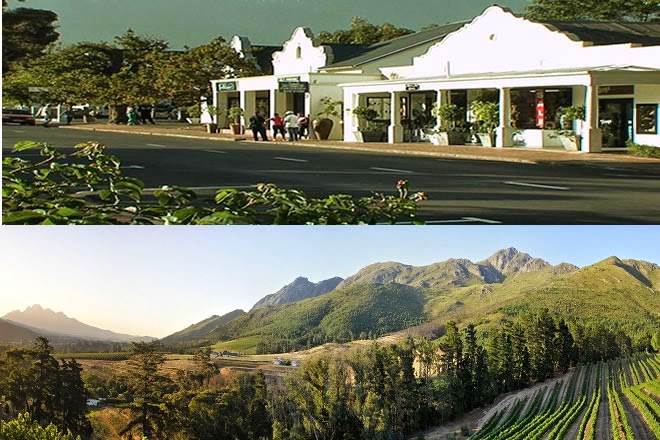
Franschhoek Wine Tram

Discover the Vineyards of Franschhoek
The Franschhoek Wine Tram hop-on hop-off tour is one of the best ways to discover the true essence of the Franschhoek Valley – picturesque vineyards, breath-taking scenery, warm hospitality, world-class cuisine, fine wines and a 300 year history.


:The Blue Line Strips:
Franschhoek Village : World renowned for its spectacular beauty, Franschhoek Village rests invitingly amongst the breathtaking mountains in the Cape winelands and serves as the departure point for the tour. 
  La Bri
: One of the first of nine farms granted to the Huguenots in 1688. Today it is a vibrant boutique winery. Visit the cellar door to experience this mix of old and new and enjoy their award winning, signature styled wines. Join them for a bespoke chocolate and wine paired tasting of Belgium chocolates hand crafted by a local chocolatier and carefully selected by their wine maker to complement and accentuate the wine’s characteristics or savour local estate cheese from Dalewood, a perfect companion to their wine.
 Holden Manz : Positioned in the most beautiful corner of the Franschhoek valley, surrounded by majestic mountains and enclosed by two rivers, the Estate offers award winning wines, al fresco dining in the midst of the vineyards and an exclusive country house retreat in the manor house. Visit the Estate for wine tastings, picnics, lunches and dinners and find a bit of heaven on South African soils.
Dieu Donne : Located high on the steep south-west facing slopes of the Franschhoek Mountains, a cool climate combined with the rocky soils of weathered granite create a unique terroir for wine making. Visit the wine tasting facility, enjoy a glass of wine on the upper terrace while soaking in the scenery or dine at the exceptional ROCA Restaurant overlooking the picturesque Franschhoek Valley.
  Chamonix : Situated on the eastern mountain slopes of the fertile Franschhoek Valley, the wine estate was originally part of the first farm, LA Cotte, granted to the Huguenots in 1688, of 290 hectares. Chamonix boasts some of highest planted vineyards in the Cape producing a range of premium wines that capture the essence and splendour of the estate.
Rickety Bridge : This celebrated 18th century winery is a popular destination in the Cape winelands with its long winemaking history, award winning wines and sophisticated tasting centre. The rich land of the Rickety Bridge estate can tell many tales of the past, but the wine making has a focus on the future and today is undoubtedly one of the most progressive boutique wineries in the Cape.
Grande Provence : The 300 year old Heritage Wine Estate, voted in the top 100 wine estates in the world, offers a unique 5-star experience that is testament to period grandeur and contemporary luxury. Here, Cape Dutch architecture blends harmoniously with modern design. While touring the grounds guests can visit The Tasting Room and enjoy the multiple award winning wines, The Jonkershuis, The Gallery, The Restaurant or The Shop or simply enjoy the views from The Sculpture Garden. Upon arrival, you will be transported by a vintage farm tractor to the estate.

Thursday, May 8, 2014

Cape Town Beaches....

With it’s white sand, million dollar views, clean water and unbelievable African sunset, Cape Town has some of the beautiful beaches on the planet.
The city is unique in having two oceans – the warm Indian Ocean and the cold Atlantic which meet at the spectacular Cape Point.
 

On the western Atlantic side of the Cape Peninsula, lie its most beautiful and trendy beaches. This is also unfortunately, the cold water side – though there are days when it’s swimmable.
The busiest and most glamorous beach in Cape Town is Clifton which lies between Sea Point and Camps Bay, relatively close to the city centre. With a spectacular backdrop of the mountain and some of the most expensive real estate in South Africa, this is where the jetset and celebs play.
Clifton is actually a collection of four beautiful but small inter-linked coves each with their own character, named (surprisingly) 1st, 2nd, 3rd and 4th beach. 4th beach – for the uber-cool and beautiful – is the busiest. Clifton is unforgettable for sundowners.
A bit further south is the beautiful Camps Bay. The beach is safe, clean and family friendly. It’s good for frisbee and beach games, or just hanging out. While stretch of lawn behind the beach is perfect for picnics. Also famous for it’s “strip” – Victoria Road adjacent to the beach – which is packed with lively cafes and restaurants, the perfect place for lunch, sunset cocktails or an evening meal.
Next door you’ll find the tiny Bakoven surrounded by big boulders – an amazing setting, zealously protected by territorial local residents.
 

Still further South is Llandudno, without doubt, the best beach in Cape Town. The white crescent shaped beach lies at the base of the steep slopes of the Twelve Apostles mountain offering spectacular views in every direction. The water is clear and tropical blue. The vibe is laid back. And because it is relatively far from the city – about 20 minutes by car – and there is very little parking, Llandudno is unspoiled by tourism.
Further south you’ll find the impressive Noordhoek and Scarborough, also worth a visit.
North of the city still on the Atlantic side is Blouberg and it’s associated beaches, highly underrated and with the classic Cape Town postcard views. Also famous for wind and kite surfing.
On the warm Indian Ocean side Boulders is the must see beach. Part of a conservation area that is home to the African Penguin, it is made up of a number of coves surrounded by large boulders. Get there early and you can claim your own private beach and spend a day hanging out with the penguins. A truly memorable beach day.


Muizenberg Beach, a famous seaside resort of yesteryear, with its brightly coloured Victorian beach houses and considerably warmer water, is also worth a visit.
There are many more great beaches to choose from in Cape Town, but these should keep you busy for a few weeks. And remember to pack your suntan cream, the Cape sun is brutal.